
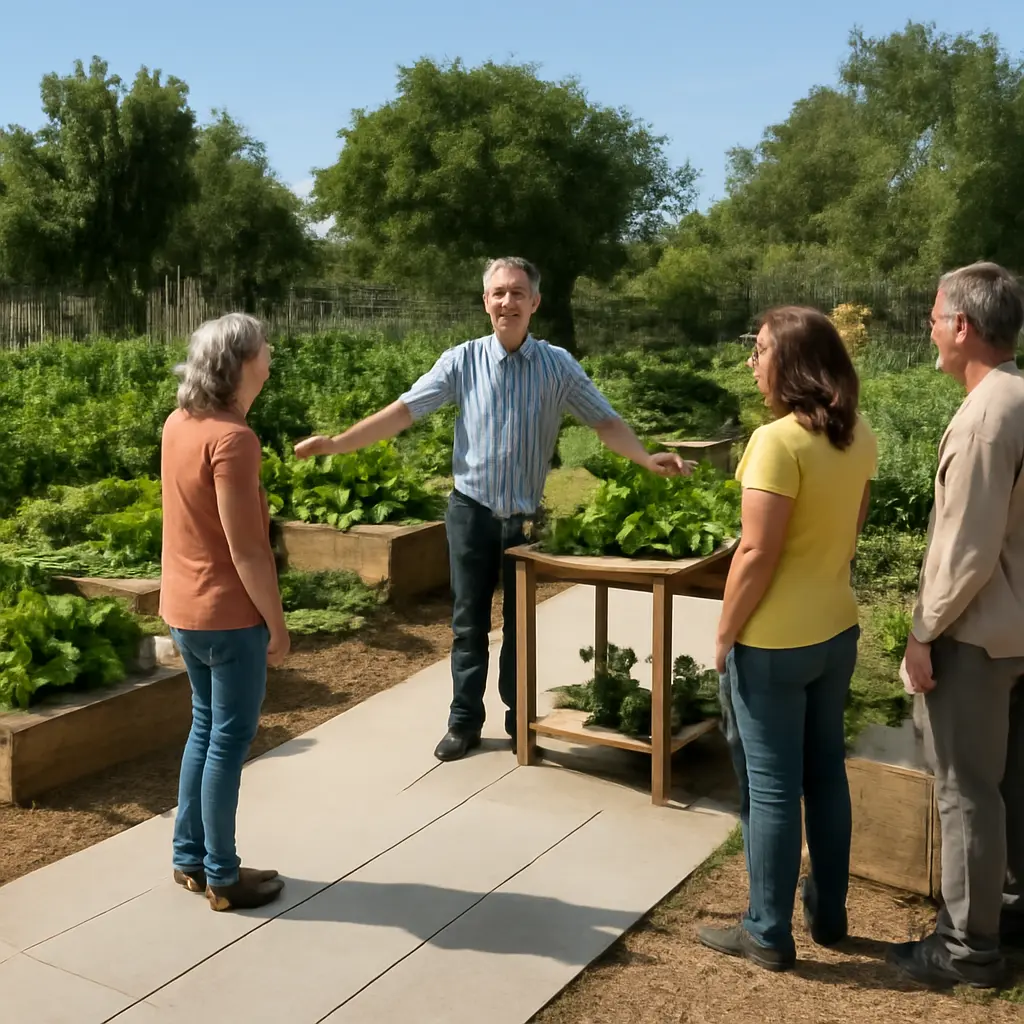
Welcoming people from different backgrounds means making it easier for everyone to participate, feel respected, and build relationships in community life. Communities can put that goal into practice through inclusive public spaces, accessible events, language support, fair representation, and everyday acts of hospitality. The need is broad: the United Nations’ International Organization for Migration estimated that 281 million people lived outside their country of birth in 2020, while the U.S. Census Bureau reported that 22.3% of people in the United States spoke a language other than English at home in 2018–2022. Those figures point to the value of practical approaches that work for newcomers and long-established residents alike.
Community welcome practices build belonging through access and participation
Belonging is the experience of being accepted as a valued member of a group, with a genuine opportunity to contribute. The National Academies of Sciences, Engineering, and Medicine describes social connection as a fundamental human need, shaped by the structure, function, and quality of relationships. Applied to community life, welcome is more than a friendly greeting: it means reducing barriers and sharing opportunities to shape local decisions.
This work matters because communities include people with different languages, migration histories, faiths, ages, disabilities, family structures, and economic circumstances. A welcoming approach does not assume that everyone has the same needs. Instead, it asks residents what would help them participate, then checks whether those changes are working.
Make public spaces and services accessible
Accessibility means that people can use community facilities, information, and services without avoidable physical, sensory, communication, or financial barriers. Practical steps include providing ramps and accessible toilets, choosing venues near public transport, offering clear signs, and making event information available in plain language and commonly used local languages.
The World Health Organization estimates that 1.3 billion people—about 16% of the world’s population—experience significant disability. That is one reason accessibility should be built into planning from the start rather than treated as a special request. For meetings, organizers can also offer remote participation, childcare where feasible, and varied event times so that work schedules and caregiving duties do not exclude residents.
Use language support to open doors
Language access is the provision of understandable information and communication support for people who are not fluent in the dominant language. Communities can translate essential notices, use qualified interpreters for public consultations, and provide multilingual help at libraries, schools, health events, and local-government offices. Visual guides and plain-language summaries can help too, but should not replace interpretation when accuracy is important.
The U.S. Census Bureau’s finding that more than one in five U.S. residents spoke a language other than English at home illustrates why language access affects everyday civic participation. A useful practice is to ask residents which languages they prefer rather than guessing based on appearance or background. That small step can make services more accurate and help people feel recognized.
Inclusive community events turn welcome into shared experience
Inclusive events are gatherings designed so that people with different identities and circumstances can participate meaningfully. Their purpose is not simply to display cultural difference; it is to create shared activities where residents meet as neighbors and contributors. Events work best when planning includes the people they aim to welcome.
Co-design celebrations and everyday activities
Co-design means involving community members in making decisions about an event, service, or public space from the beginning. A neighborhood festival, for example, might invite residents to suggest music, food, activities, and access arrangements, while compensating cultural advisers or performers when resources allow. Regular activities—such as gardening, sports, book clubs, and walking groups—can be just as effective as large festivals because they give people repeated chances to connect.
The National Academies’ work on social connection emphasizes that relationship quality and opportunities for interaction matter. In practice, organizers can help conversation happen by offering small-group activities, welcoming hosts, and clear ways for newcomers to join without already knowing someone. Ask participants afterward what felt inviting and what should change.
Respect cultural and religious differences
Cultural respect means recognizing that customs, beliefs, and ways of communicating vary, without treating any person as a spokesperson for an entire group. Communities can check dietary needs, consider religious and cultural calendars when scheduling, and make space for different forms of dress and family participation. Hosts should explain local event routines clearly instead of expecting newcomers to know them.
The United Nations’ 2022 International Migrant Stock data estimated 281 million international migrants worldwide in 2020, reflecting the many migration stories that shape communities. That statistic does not describe every kind of diversity, but it underlines why welcoming practices should be flexible and person-centered. Invite people to share only what they wish, and avoid asking individuals to explain or represent a culture on demand.
Shared leadership makes community welcome durable
Shared leadership means that people affected by community decisions have a meaningful role in making them. A welcome effort is more credible when residents from different backgrounds help set priorities, manage budgets, and evaluate results—not just attend events. This connects hospitality with fairness and gives local knowledge a route into public decisions.
Create trusted routes into local decision-making
Communities can establish resident advisory groups, invite newcomers to serve on committees, and hold listening sessions in familiar, accessible venues. Outreach should use channels people already trust, such as schools, libraries, faith communities, neighborhood groups, and local service organizations. Offer interpretation and explain how feedback will influence decisions, then report back on what changed.
The U.S. Census Bureau’s language-at-home data provides a practical reason to offer more than one way to participate. Written surveys alone may miss residents who have limited literacy, limited internet access, or little time. Combining in-person conversations, phone or online options, and translated materials can provide a fuller picture of community priorities.
Build welcoming habits into organizations
Organizational inclusion is the routine use of policies and behaviors that help people participate fairly. Community groups can set clear expectations against harassment, train volunteers to greet people without assumptions, publish accessible contact details, and provide a named person for questions. They can also review who attends, who returns, and who holds leadership roles.
A welcoming policy has little effect if residents cannot see or use it. Ask participants about their experience, track participation in privacy-conscious ways, and make improvements visible. If one group is consistently missing, treat that as a prompt to listen and adjust—not as evidence that the group is uninterested.
Conclusion: Turn welcome into a shared community practice
Communities can welcome people from different backgrounds by improving access, providing language support, designing inclusive events, respecting cultural differences, and sharing leadership. The evidence on disability, language use, and migration shows that residents’ circumstances are varied; a single approach will not fit everyone. Start by asking people what would help, make practical changes with them, and review whether those changes lead to lasting participation and connection. A welcoming community is built through consistent actions that make every resident’s presence and contribution matter.
Sources: National Academies of Sciences, Engineering, and Medicine, Social Isolation and Loneliness in Older Adults: Opportunities for the Health Care System, 2020, https://nap.nationalacademies.org/catalog/25663/social-isolation-and-loneliness-in-older-adults-opportunities-for-the-health-care-system; World Health Organization, Disability, https://www.who.int/news-room/fact-sheets/detail/disability-and-health; U.S. Census Bureau, Language Use in the United States: 2018–2022, 2023, https://www.census.gov/newsroom/press-releases/2023/language-use.html; United Nations Department of Economic and Social Affairs, International Migrant Stock 2020, https://www.un.org/development/desa/pd/content/international-migrant-stock.