
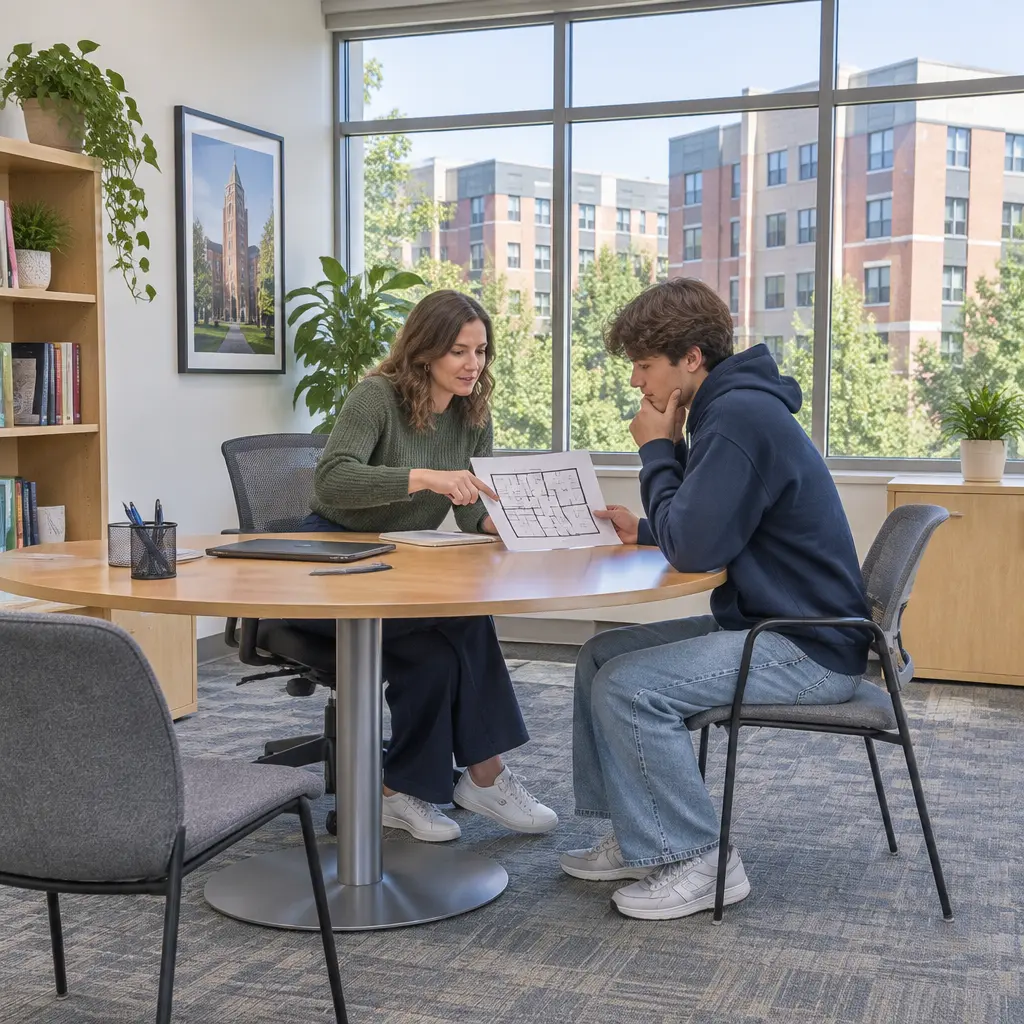
International student accommodation is housing arranged for students studying outside their home country, ranging from university residences and homestays to private rentals and purpose-built student housing. Finding a safe, affordable place takes more than comparing rent: students should start early, verify providers and contracts, budget for upfront costs, and understand local tenant rules. The scale of the need is substantial: UNESCO reported that more than 6.4 million students were studying outside their country of origin in 2021. The sections below explain the main housing options, a practical search process, cost and safety checks, and what to do if plans go wrong.
Accommodation options for international students
Student accommodation is housing intended or used by people enrolled in education. Universities commonly distinguish between institution-managed housing and accommodation students arrange independently. The right choice depends on budget, location, desired independence, accessibility needs, and how long the student will stay. Names and legal rights vary by country, so confirm local definitions before signing.
University residences and halls
University residences are rooms or apartments managed by a university or an approved housing provider. They may include utilities, furnishings, internet, shared kitchens, or meal plans, and often provide a convenient route into campus life. Availability is limited, however, and a room offer should not be assumed until the university confirms it in writing. Check the residence’s contract length, payment schedule, included services, cancellation terms, and rules for guests or breaks in occupancy.
Private rentals and shared housing
A private rental is a home leased from a landlord or letting agent; shared housing means renting a room or home with other occupants. These options can offer greater choice in location and price, but students may need to arrange utilities, furniture, internet, and insurance separately. Before committing, establish whether the agreement is for the whole property or an individual room, who is responsible for bills, and whether every occupant is named on the contract. In some countries, a guarantor or local rental history may be requested; ask the institution’s international office about alternatives if these are not available.
Homestays and purpose-built student housing
A homestay places a student with a host household, often with meals or household support included. Purpose-built student accommodation (PBSA) is housing designed specifically for students, typically offering furnished rooms and shared facilities. Both can simplify arrival, but the label alone does not guarantee quality or fair terms. Verify who operates the property, what the price includes, how maintenance is handled, and whether the contract complies with local housing rules.
How to find student accommodation safely
A reliable search combines official university information with careful comparison and direct verification. Begin as soon as an offer of study is accepted: popular university housing can fill before the academic term, while visa, travel, and enrollment timelines may leave little room to resolve a housing problem. The U.S. Department of State advises international students to understand their living arrangements and costs as part of preparing for study abroad; the same principle applies wherever a student plans to enroll.
Start with trusted sources
The university accommodation office is usually the best first contact for campus housing, approved private providers, local rental guidance, and arrival support. Ask whether the institution has a housing portal, verified listings, temporary arrival accommodation, or a process for reporting scams. Compare those resources with established rental platforms and licensed agents where licensing applies. Treat social media posts and informal listings as leads, not proof that a room or landlord is genuine.
Compare location, transport, and total cost
A room’s advertised rent is only one part of its cost. Compare the full monthly budget: rent, utilities, internet, transport, food, laundry, insurance, and any service or building fees. Check the commute at the times classes begin and end, and confirm access to grocery stores, healthcare, and essential services. The Institute for College Access & Success has documented the importance of housing and other non-tuition costs in student budgets, reinforcing why students should assess the total cost of attendance rather than rent alone.
Verify the listing and avoid scams
A legitimate housing offer should be verifiable through the university, an identifiable property manager, or the relevant local rental registration system. Request a live or in-person viewing where feasible, confirm the address independently, and ask for the landlord or agent’s full name and business details. Be cautious if someone pressures you to pay immediately, refuses a viewing, offers a price far below comparable homes, or requests payment by gift card, cryptocurrency, or a wire transfer to an unrelated person. The U.S. Federal Trade Commission warns consumers about rental scams involving copied listings and demands for money before a property has been verified. Never send money solely to “reserve” a room without confirming the provider and written terms.
How to secure accommodation and protect your rights
Securing accommodation means confirming the offer, understanding the agreement, and documenting the condition and payments. Rental law differs significantly across jurisdictions: a deposit, notice period, or cancellation right that is standard in one country may be restricted or handled differently in another. Consult the university’s housing or international student office and official local tenant guidance before signing or paying.
Read the contract before paying
A tenancy or accommodation agreement sets out the parties’ responsibilities and the terms of occupancy. Check the exact room or property, move-in and move-out dates, rent amount and due dates, deposit conditions, included utilities, maintenance arrangements, house rules, and the process for ending or renewing the agreement. Confirm whether the rent is weekly, monthly, or based on an academic term, and ask for unclear clauses in writing. Keep a complete copy of the signed contract and all messages about changes.
Plan for deposits and upfront expenses
Upfront housing costs can include a deposit, first rent payment, application or administrative charges where lawful, furnishings, and utility setup. Rules governing deposits vary by location; some jurisdictions require landlords to protect deposits through an approved scheme or provide a prescribed receipt. Use traceable payment methods and obtain a written receipt identifying the recipient, amount, date, and purpose. Do not assume that a payment described as a “holding fee” is refundable: check the agreement and local law before paying.
Document the property and arrange essentials
At move-in, record the condition of the room and shared areas with dated photographs or video, and submit an inventory or condition report as the provider instructs. Note existing damage, meter readings, keys received, and any repairs promised. Confirm how to report urgent maintenance, what insurance is required or recommended, and how to access utilities and internet. The U.S. Department of Housing and Urban Development’s renter guidance similarly emphasizes understanding lease obligations and documenting housing concerns; students should use the equivalent official resources in their destination country.
A practical accommodation search timeline
A timeline helps international students coordinate housing with admission, visa processing, travel, and arrival. Exact deadlines vary by institution and city, so use the university’s dates as the authoritative starting point.
- After accepting an offer, ask the university about application dates, residence availability, approved providers, and temporary housing.
- Set a realistic monthly and upfront budget, including transport and bills, then shortlist areas by commute and essential services.
- Compare suitable options and verify each provider, property, contract, and payment request before making a commitment.
- Save the signed agreement, receipts, provider contact details, and move-in instructions in a secure place.
- Before arrival, confirm check-in arrangements and keep a backup plan in case the room is unavailable or materially different from the listing.
- At move-in, document the property’s condition and report discrepancies promptly in writing.
If accommodation plans fail
If a provider cancels, a room is unsafe, or a suspected scam occurs, contact the university’s accommodation or international student office immediately and preserve contracts, messages, advertisements, and payment records. For immediate safety risks, contact local emergency services or the relevant housing authority. If money has been sent to a suspected fraudster, notify the bank or payment provider promptly and report the incident to the local consumer-protection or law-enforcement agency. Students should avoid moving into an unverified property simply because arrival is near; university emergency housing, reputable short-term accommodation, or a trusted local support service may provide a safer interim option.
Conclusion
Finding and securing student accommodation involves choosing the right housing type, using trusted search channels, comparing total costs, verifying providers, and understanding the contract before paying. University residences, private rentals, shared homes, homestays, and purpose-built student housing each offer different trade-offs in price, flexibility, and support. Start early, keep written records, and seek advice from the university and official local tenant resources. Taking these steps helps protect both a student’s finances and their ability to settle safely into study abroad.
Sources: UNESCO Institute for Statistics, “Global flow of tertiary-level students,” UNESCO Data Browser, https://databrowser.uis.unesco.org/; U.S. Department of State, “Planning Your Arrival,” EducationUSA, https://educationusa.state.gov/your-5-steps-us-study/prepare-your-departure/planning-your-arrival; The Institute for College Access & Success, “Student Expense Budgets,” https://ticas.org/affordability-2/student-expense-budgets/; Federal Trade Commission, “Rental Scams,” https://consumer.ftc.gov/articles/rental-scams; U.S. Department of Housing and Urban Development, “Tenant Rights, Laws and Protections,” https://www.hud.gov/topics/rental_assistance/tenantrights